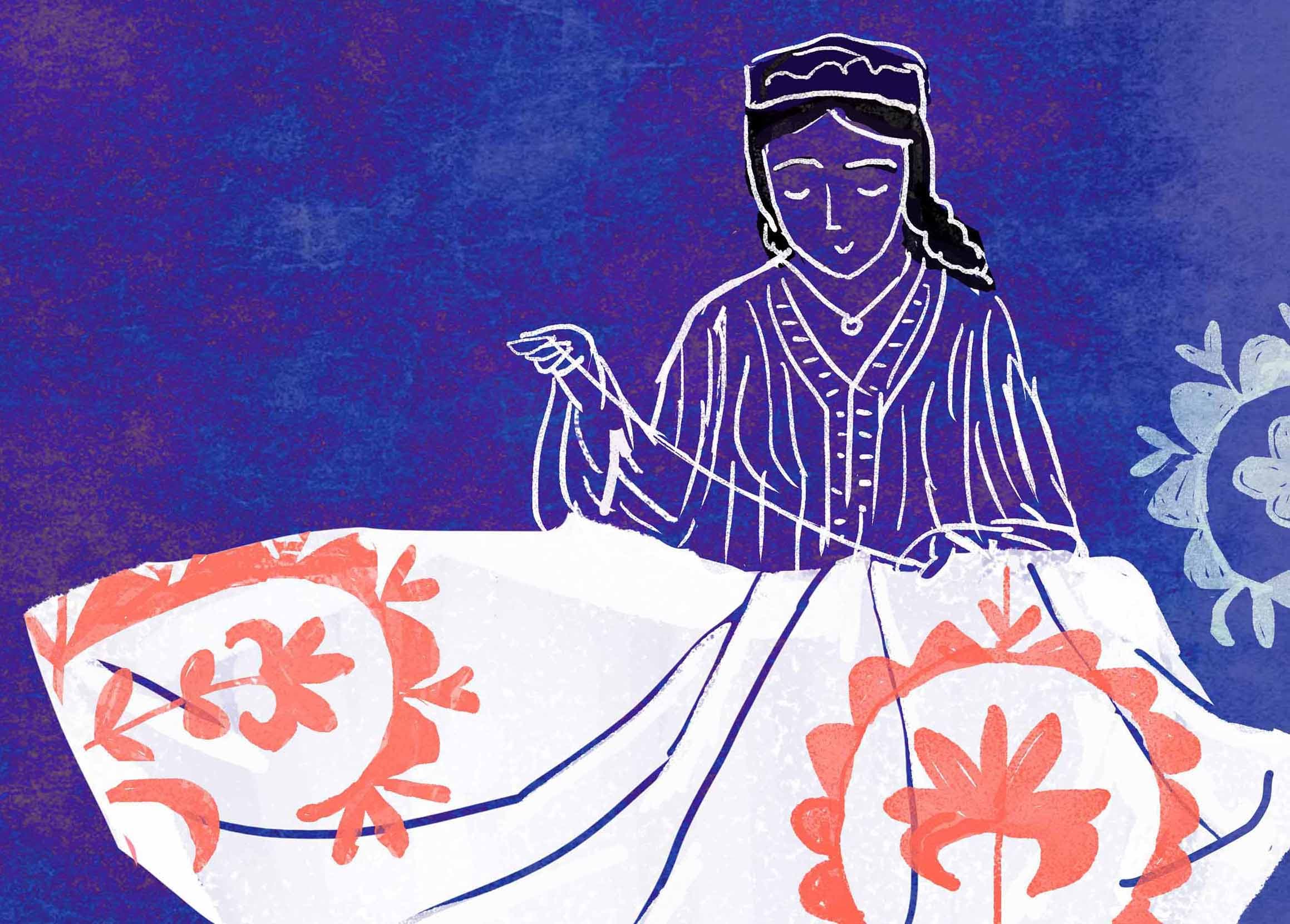
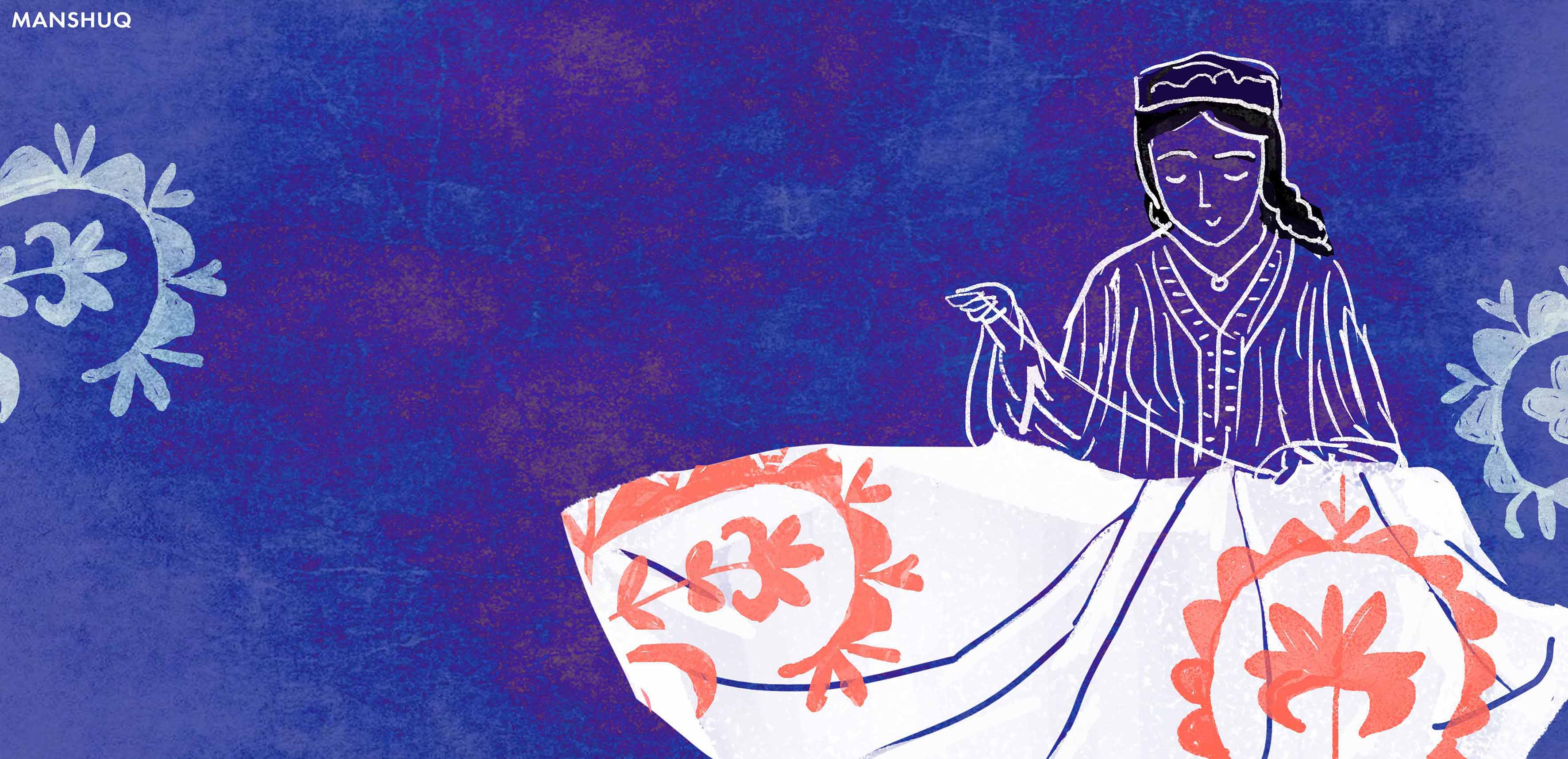
Our other strength is the story that is in everything we do. Even at the development stage, we pay attention to what exactly we want to convey with our work. We based our collections "Lola" and "Mountains", for example, on the paintings of ancient Penjikent. Or there’s "Anor" (pomegranate), which predicts that there will be many children in your family, or "Kalamfur" (pepper), which wards off the evil eye. The "Tojikam" collection, which was shown a year ago in Dushanbe, Uzbekistan, and Italy, is dedicated to ornament patterns from Tajikistan’s rural areas.
Our craftsmen need to go to museums more often, create their own collection of patterns for their works, and then work around that. There’s no need to copy anyone.
In my training sessions about traditional crafts, I always say that today people don’t buy things, they buy stories. And people want to know the real story, not a fictional one.
Craftsmanship is not really compatible with business, at least as it’s practiced today. That’s why you have to figure out what it is you want - do you want to have a business or preserve your traditions? What does craftsmanship mean to you - is it just making products, or is it about the process of reviving history?
In 2014, the Armugon Crafts Center applied for a certificate of excellence from UNESCO. This was the first step to establishing ourselves in international markets, and we’ve made some permanent partners. In addition, our center’s team has participated multiple times in different fairs and exhibitions. There’s a demand for products, but everyone knows that working by hand isn’t cheap. All the products we manufacture are of a very high quality.
Last November, I entered my own works in the second Tashkent International Biennale of Applied Arts. I got first place out of masters from 13 different countries. It’s very difficult to compete in embroidery, I didn’t expect it at all, and I’m very proud of this victory.
The President of Tajikistan declared that 2018 would be the Year of Tourism and the Development of Traditional Crafts. That’s when many craftswomen started to appear.